Stop Losses and Take Profits: The Art of Planned Exits
Every trader obsesses over entries. They'll spend hours perfecting their setup, waiting for the ideal moment to get in. But here's what separates profitable traders from everyone else: they know exactly when they're getting out before they ever get in.
Stop losses and take profits aren't safety nets. They're the entire framework that makes trading sustainable. They're how you remove emotion from the equation and let mathematics do the work.
What Stop Losses Actually Do
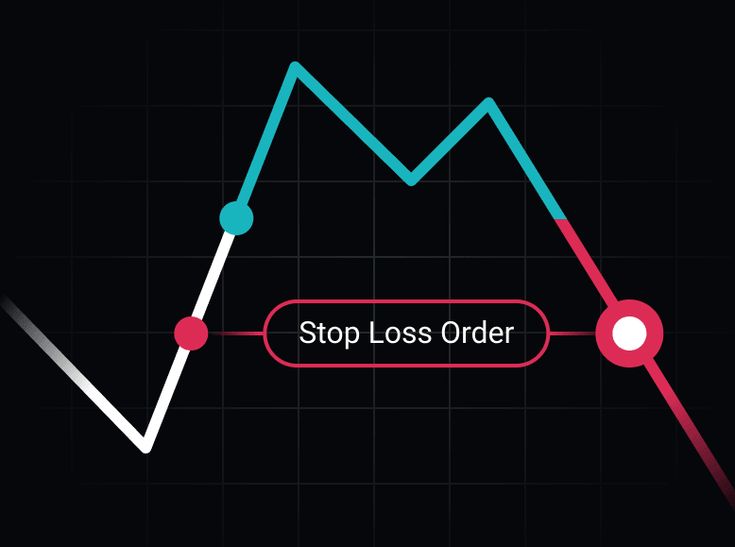
A stop loss is your predetermined exit point when the trade moves against you. It's the line you draw that says, "If price reaches this level, I was wrong about this trade, and I'm getting out."
This isn't about being negative or expecting to lose. It's about accepting that not every trade works out—and deciding in advance exactly how much you're willing to risk to find out.
Without a stop loss, you're hoping. With one, you're managing.
The purpose:
Protect your capital. One bad trade without a stop loss can erase weeks of careful gains. A stop loss caps your downside so that no single trade can do serious damage to your account.
You set it based on technical levels—support, resistance, or a logical invalidation point for your setup. It should represent the price level where your trade idea is no longer valid, not just an arbitrary dollar amount you're comfortable losing.
What Take Profits Actually Do
A take profit is your predetermined exit point when the trade moves in your favor. It's where you've decided the reward is sufficient and you're closing the position—no second-guessing, no waiting for "just a little more."
This is how you lock in gains before the market changes its mind.
The purpose:
Secure profits while they exist. Markets reverse. Momentum shifts. What looks like a winning trade at one moment can turn against you in the next. A take profit ensures you actually capture the gain instead of watching it evaporate.
You set it based on realistic price targets—previous highs or lows, key resistance or support levels, or a risk-reward ratio that makes mathematical sense (typically 1:2 or better).
Why Both Matter Equally
Here's the trap most traders fall into: they'll set a stop loss because they understand risk management, but they won't set a take profit because they want to "see how far it goes."
That's not strategy. That's greed disguised as flexibility.
Every trade needs both. Your stop loss defines your risk. Your take profit defines your reward. Together, they create the risk-reward ratio that determines whether your trading is mathematically sustainable.
The minimum standard: 3:1 risk-reward ratio.
If you're risking 100 pips, you should be targeting at least 300 pips in potential profit. This isn't arbitrary—it's the baseline that allows you to stay profitable even when you're wrong more often than you're right. With a 3:1 ratio, you only need to win 30% of your trades to break even, and anything above that puts you in profit.
If you're risking $50 without targeting at least $150, you're not giving yourself room to survive the inevitable losses. The math has to work in your favor before you even enter.
Plan the exit. Both exits. And make sure the reward justifies the risk.
Stacking Take Profits: The Smarter Approach
Here's where it gets more sophisticated. Instead of setting one take profit and closing your entire position, you can stack multiple take profits at different levels.
This is how you multiply your gains instead of capping them.
How it works:
You divide your position into portions and set different take profit levels for each portion. Each TP closes part of your position, but the rest keeps running.
Let's say you enter a trade that has potential to move 500 pips to its furthest target. Instead of setting one take profit at 500 pips and closing everything there, you structure it like this:
- TP1 at 100 pips: Close 1/3 of your position
- TP2 at 300 pips: Close another 1/3 of your position
- TP3 at 500 pips: Close the final 1/3 of your position
Here's the math that matters:
If you only had one take profit at 500 pips, you'd make 500 pips total when it hits.
But with stacked TPs, you're making:
- 100 pips from TP1
- 300 pips from TP2
- 500 pips from TP3
Total: 900 pips instead of 500 pips.
Same trade. Same market movement. But you've captured nearly double the profit by structuring your exits intelligently.
Why this works:
You're not gambling on the full position reaching the furthest target. TP1 locks in profit early. TP2 secures more as the trade develops. TP3 captures the extended move if the market cooperates fully.
Even if the trade reverses before hitting TP3, you've already secured gains from TP1 and TP2. You're building profit incrementally instead of betting everything on a single outcome.
The Psychology of Stacked Take Profits
Stacking TPs does something critical for your trading psychology: it eliminates the all-or-nothing mentality.
When you have one take profit, you're either right or wrong. You either hit it or you don't. That binary outcome creates pressure. It makes you second-guess. It tempts you to move your TP closer when price stalls, or further when it's running.
With stacked TPs, you're guaranteed some level of success if the trade moves in your favor at all. That first TP hit releases the psychological pressure. You're in profit. Now you can let the rest ride without the stress.
It's the difference between hoping the entire trade works perfectly and knowing you've already won something regardless of what happens next.
Setting Your Levels Strategically
Your stop loss should sit just beyond the point where your trade idea is invalidated. If you're buying at support, your stop goes below that support—because if it breaks, you were wrong about the setup.
Your take profits should align with realistic resistance levels, not fantasy targets. TP1 should be conservative—a level price will likely reach if your direction is correct. TP2 should be probable but not guaranteed. TP3 should be ambitious—the extended move you'll capture when conditions align.
Don't set TPs based on round numbers or what "feels good." Set them based on chart structure, previous highs and lows, and where price has historically reacted.
The Reserve Approach: Remove Discretion, Add Structure
The best traders aren't the most flexible. They're the most disciplined.
Stop losses and take profits remove the temptation to override your plan mid-trade. They force you to think clearly before you enter, when emotions aren't clouding your judgment.
Stacking take profits adds nuance to that discipline. It lets you scale out of positions intelligently without abandoning the trade too early or holding too long.
Set your stop. Set your TPs. Let the market come to you.
What This Actually Looks Like
You enter long at 1.2000 with 0.30 lots total, targeting a 500-pip move.
You split your position into three equal parts of 0.10 lots each.
- Stop loss: 1.1900 (100 pips risk = $30 loss at 0.30 lots)
- TP1: 1.2100 (100 pips = $10 profit on 0.10 lots)
- TP2: 1.2300 (300 pips = $30 profit on 0.10 lots)
- TP3: 1.2500 (500 pips = $50 profit on 0.10 lots)
Risk-reward check: You're risking $30 to make a total of $90 ($10 + $30 + $50). That's a 3:1 ratio—exactly where you need to be.
Best case scenario: All three TPs hit, you make $90 total.
Conservative scenario: Only TP1 and TP2 hit, you still made $40.
Worst case scenario: Stop loss hits, you lost $30—exactly what you planned for.
You know your maximum risk. You know your potential reward at every level. There's no guessing. No hoping. Just execution.
The Reality Check
Most traders lose money not because they can't find good setups, but because they don't know when to get out. They hold losers too long hoping they'll reverse. They close winners too early fearing they'll disappear.
Stop losses and take profits solve both problems.
Your stop protects you from catastrophic losses. Your take profits ensure you actually collect what the market gives you. Stacking your TPs lets you capture gains progressively without leaving too much on the table.
Learn to exit as well as you enter. That's where the real money is made.
%20Instagram%20%E2%80%A2%20Messages.jpg)
.webp)